
I was born Robert John Monette on April 7, 1946. Back then everyone called me Bobby.
This chapter is not a history lesson. It is the world as I remember it: Montreal streets, St-Eustache-sur-le-Lac, Weredale, trains, boxing, Green Island, first love, trouble, laughter, and the freedom of growing up in the 1950s.
Some memories are sharp enough that I can still hear the train whistle. Others have holes in them. I will not fill those holes with things I do not remember. This is my story as I remember it.
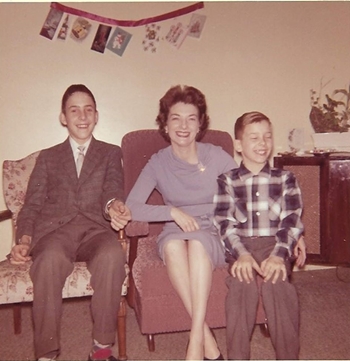
My Parents
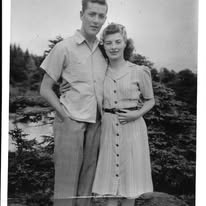
My father was John James “Jack” Monette. My mother was Noreen Glady Hill, a warm-hearted Newfoundlander. Jack had served in the Navy and married Mom in St. John’s, Newfoundland, in 1945.
Home with Jack could be unpredictable. Alcohol changed him. There were nights of yelling and violence, and as a boy I learned to watch the room and read his mood. One night in St-Eustache, Mom was badly hurt while trying to protect me. I was hurt too. Those are memories that stay with you.
But my mother was more than what happened to her. She was beautiful, gentle, and rarely drank, smoked, or used bad language when we were growing up. She loved music and dancing. Her Newfoundland meal was corned beef and cabbage. She loved my friends, especially Mike, and she loved Valerie.
Mom eventually went to work because she understood that one day she might have to support herself and her two boys. That day came when she finally separated from Jack in 1961.
My Mother’s Last Promise
On February 22, 2013, at about ten in the morning, Mom talked to me during the final hours of her life.
She told me she was sorry for what Jack had done to me. Then she asked me to promise her something.
Neither my mother nor my father had ever been people who said “I love you” to me. I had carried that same wall into my own family.
“Bobby, promise me that you will START hugging your kids and grandkids. Every time you see them.”
I promised.
Then my mother told me she loved me. I told her I loved her too. We cried.
She died that afternoon at about 3:30.
I kept my promise. I started hugging my grandchildren. Then my children. At first it was awkward for some of us because we had not grown up that way. Over time it changed. Now hugs happen coming in and going out, anywhere, even in front of strangers.
I still have that wall in me. But Mom put a crack in it before she died, and love started getting through.
Montreal — Cuvillier Street
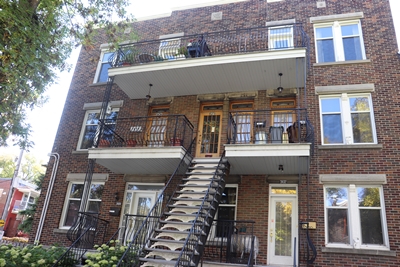
After a short time in Châteauguay, we lived at 3436 rue Cuvillier in Montreal. As kids we played in the lanes and streets. In winter we went tobogganing. The city was our playground.
By seven years old I was already working. Early in the morning I sold English and French newspapers to the men arriving at the CP Rail Angus Shops carrying their steel lunch pails. I did that until we moved to St-Eustache.
After school I went to the East End Boys Club and learned to box. I became good at it. Boxing gave me something school did not: confidence. I struggled badly with reading and writing, but nobody knew why. I was called lazy and treated as though I was not trying. Many years later I learned the word that explained so much of my childhood: dyslexia.
When words failed me, my fists sometimes did not. Boxing would come in handy more than once.
Weredale
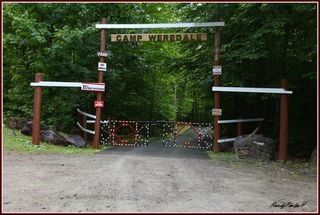
Around eight years old, I began spending the summer months at Weredale. My father and Uncle Gordie had also been sent there when they were boys. My grandmother Monette-Pugh knew one of the directors and helped arrange for me to go.
For my first two years I was in Algonquin Hut. Later I moved to Huron Hut. There were about twelve boys to a hut, sleeping in bunk beds.
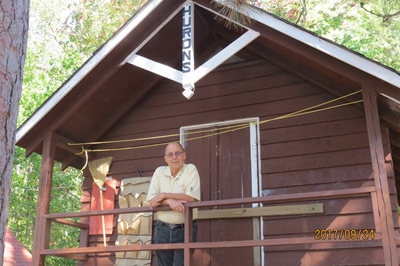
The day started early. We lined up for meals. After breakfast we returned to make our beds, straighten our cubby holes, and clean around the hut. Everything was inspected. Points were awarded, and the winning hut might receive a treat.
Then came activities: swimming, boating, canoeing, sailing, crafts, track and field and more. There was always something scheduled until lights-out.
Weredale could be harsh. Discipline could be humiliating and physical. If a boy was caught swearing, one punishment I remember was having a big piece of Lifebuoy soap put in his mouth.
When I moved into Huron Hut, I also experienced repeated abuse. I am not going into the details. Some things happened at Weredale that I have chosen not to describe. They belong to me, and I’m leaving them there.
But Weredale taught me good things too. I learned to swim, canoe and sail. I learned discipline. Most of all, I learned to take care of myself.
At Weredale, you had to be tough.
Boxing came in handy.
I made it in the end.
Nowhere to Go
By thirteen, I had learned something a kid should not have to learn that young: how to survive without always knowing where I was going to sleep that night.
Sometimes I stayed with Valerie’s family. Sometimes with Uncle Gordie. Sometimes a friend would take me in. And sometimes there was nobody.
I remember an empty railway car near the POM Bakery. On nights when I had nowhere else to go, that empty car could become a place to sleep.
Thirteen years old. No bedroom. No key in my pocket. No parent waiting up wondering when I was coming home. Just Bobby trying to figure out where he could get through another night.
Food could be the same problem. There were times when I stole because I was hungry. I am not proud of that, and I am not putting it in this book as an excuse. It is simply what happened.
That is why the empty-bottle story matters. I knew what an empty bottle was worth because there had been days when those bottles meant bread or something else to eat.
I became independent early, but not because somebody sat me down and taught me independence. Sometimes I was independent because I had no choice.
Maybe that is part of why Valerie, Mike, Bobby Kibbe, the gang, Green Island and the trains meant so much to me. Those were not simply adventures. Those people and places were my world when home did not always feel like one.
Fère Street — St-Eustache-sur-le-Lac
Moving to St-Eustache-sur-le-Lac changed my life.
At school I continued to struggle. I repeated a grade, and teachers still did not understand why reading and writing were so difficult for me. But being held back had one wonderful result.
I met Valerie.
Valerie became my first love. Her family was good to me, and Mom loved her. I can still picture Valerie sitting on the back steps of our house on Fère Street, waiting for me to come home.
We kissed. That was as far as it went. I was a young teenager in love, and those years with Valerie became some of the happiest memories of my childhood.
The Gang
There was Jimmy “Bergie” Burgoyne, Valerie, Bobby Kibbe, Paul Lewis, Bobby Wright, Tommy Shanly, Mike Jeanrie, Debbie Busby, Linda M, Carol Pickles, and Carol L, and others. Some friendships lasted a lifetime.
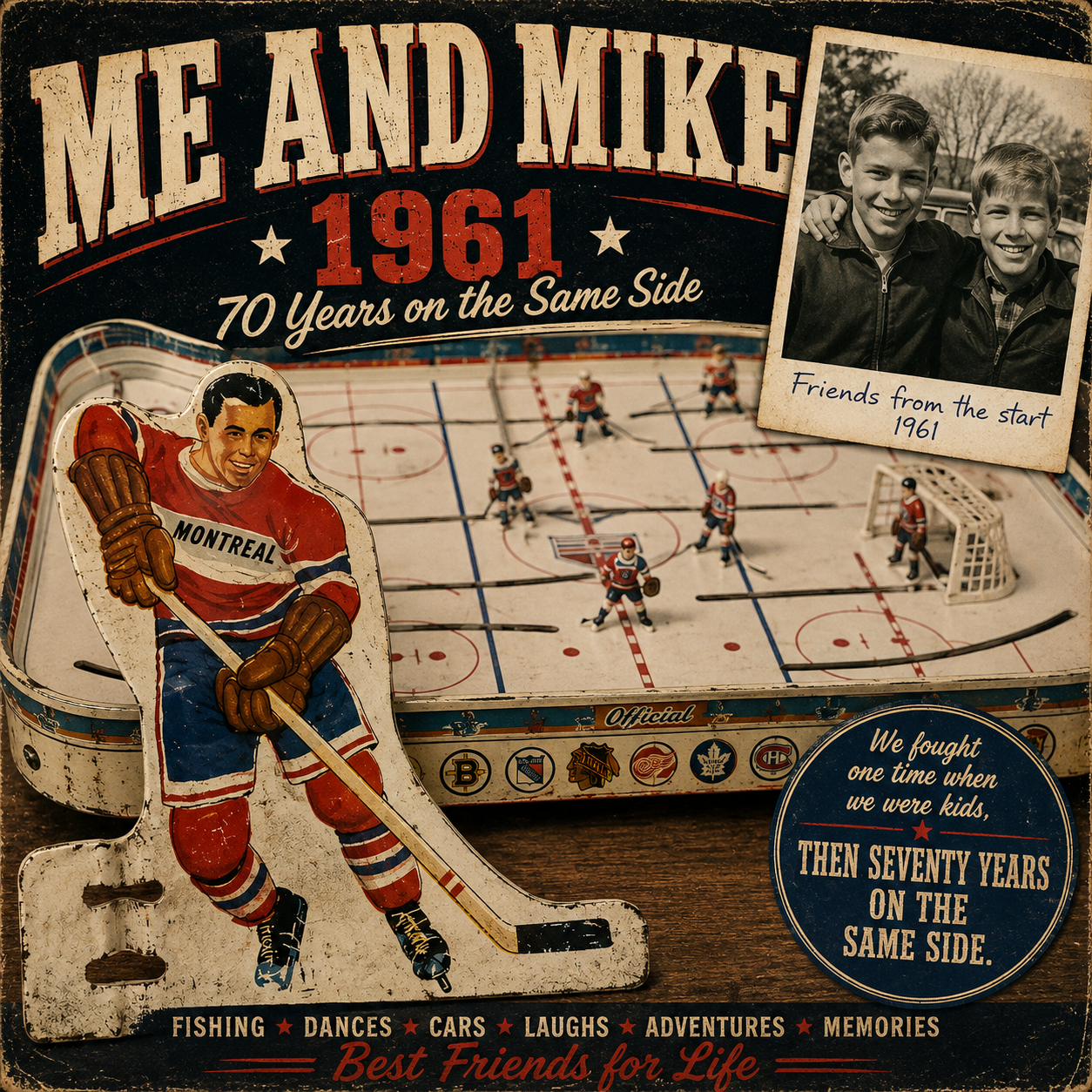
We did not have much money. We found ways to earn it: paper routes, cutting grass, shovelling snow, caddying, picking worms and apples, and whatever else came along.
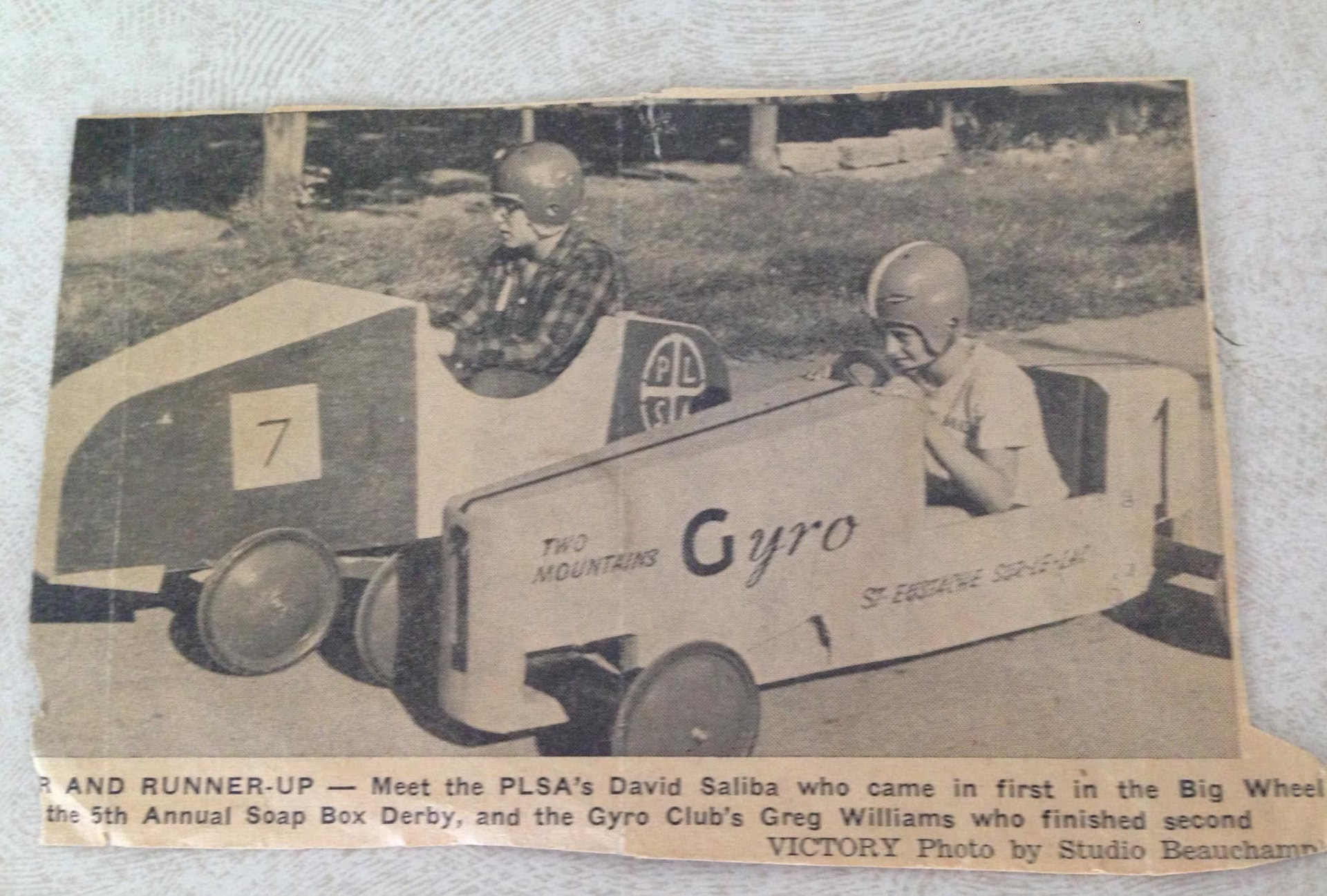
We rode bicycles everywhere. We fished. We swam. We went to dances at Cedarview and the Gyro.
More Memories of the Gang
Writing these stories and songs has brought people from those years back into my life. Paul Lewis and his wife remembered many of the same people and places I did. Paul was part of our crowd, and Bobby Kibbe was his best friend. Years later, Bobby would be Paul's best man when he got married.
Everybody seemed connected somehow. We knew the McKenzies, the Tauntons, the Busbys, the Burgoynes and so many others. One of the Tauntons later married the sister of my stepbrother's wife. Debbie Busby was one of Valerie Burgoyne's good friends and part of our gang.
That was St-Eustache in those days.
People slept with their windows open. The milkman could come into the house, look in the refrigerator to see what was needed, leave the milk and go on his way. We could walk just about anywhere and felt safe.
But everybody knew everybody. If one of us did something we shouldn't have, there was a pretty good chance somebody would see us — and our mother might know about it before we got home.
The dances were a big part of our lives. We went to Cedarview and the Gyro on weekends, but the winter carnival was something special. A tractor pulled a wagon filled with hay, carrying kids from one dance to another. We skated, went sledding and played football on weekends.
And then there was hopping cars.
Once the snow was packed down hard on the streets, we'd wait for a car to stop at a stop sign, crouch down behind it and grab onto the rear bumper. Then we'd let the car pull us along the snowy road until we fell off or the driver stopped. We'd let go and run away laughing.
I remember hopping one from around Fifth or Seventh near the Luna and riding behind it until just past the golf course. I lived on Fère Street, so I had found myself a pretty good ride toward home.
Looking back at eighty years old, I wonder how we survived some of the things we did.
Back then, we didn't think much about it.
We were just having fun.
Scott's and the Jukebox
Another place we all hung out was Scott's. That was where we went to listen to music. Sometimes eight of us would pile into one booth, feeding coins into the jukebox and arguing over which songs we were going to play next.
Norm was the man at Scott's, and he was great to all of us. He didn't seem to care how many kids we squeezed into a booth or how long we sat there listening to music.
Carol Kertland was part of those days too. She later married Paul Lewis. Carol remembers Norm fondly, and Norm was even at Carol and Paul's wedding.
Those songs on the jukebox were part of the soundtrack of our teenage years. More than sixty years later, I can still remember what music meant to us.
JED'S Soda Bar
There was also JED'S Soda Bar in St-Eustache-sur-le-Lac, another place that was part of the world we grew up in.
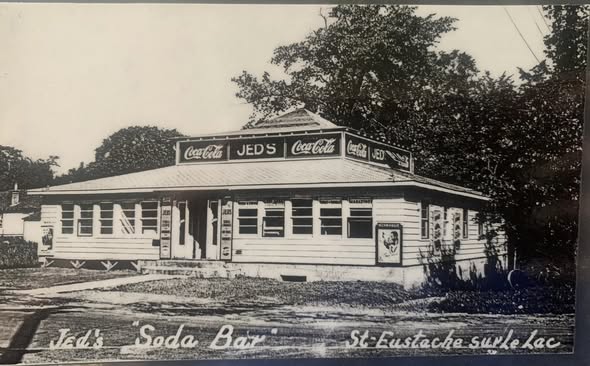
We were not angels.
But we were kids in the 1950s, and freedom meant something different then.
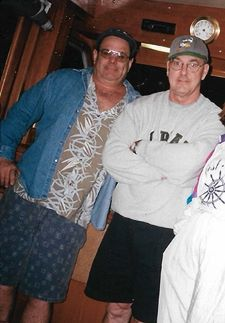
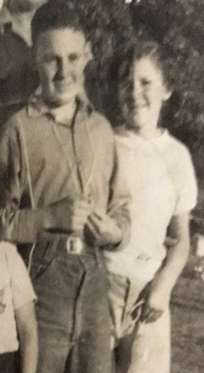
Some of the friends who were such an important part of my St-Eustache years.
Green Island — Before Woodstock
Between St-Eustache and Laval West sat Green Island. Nobody lived there. To us, it felt like our island.
The St-Eustache side was calmer. The rough water and rapids were on the Laval side. We swam, explored, fished, laughed and spent summer days there. Boys and girls sometimes went skinny-dipping. Valerie would sit on my shoulders for chicken fights in the water. At parties we played spin the bottle and stole kisses in closets.
Years later, when people talked about the freedom of Woodstock, I understood the feeling.
We had our own little version years earlier — an island, a river, music, friends and almost no adult supervision.
One day Mike, Bobby Kibbe, Tommy Shanly and I took Tommy’s father’s boat into the rapids. We were about thirteen or fourteen.
The boat tipped.
Tommy started yelling that his father was going to kill him.
“Relax. We’ll get it out.”
Eventually we got the boat to shore. The motor had gone underwater, but somehow the four of us got everything working again.
We were wet, relieved, and probably laughing.
At that age we did not call it dangerous.
We called it fun.
The Train Bridge
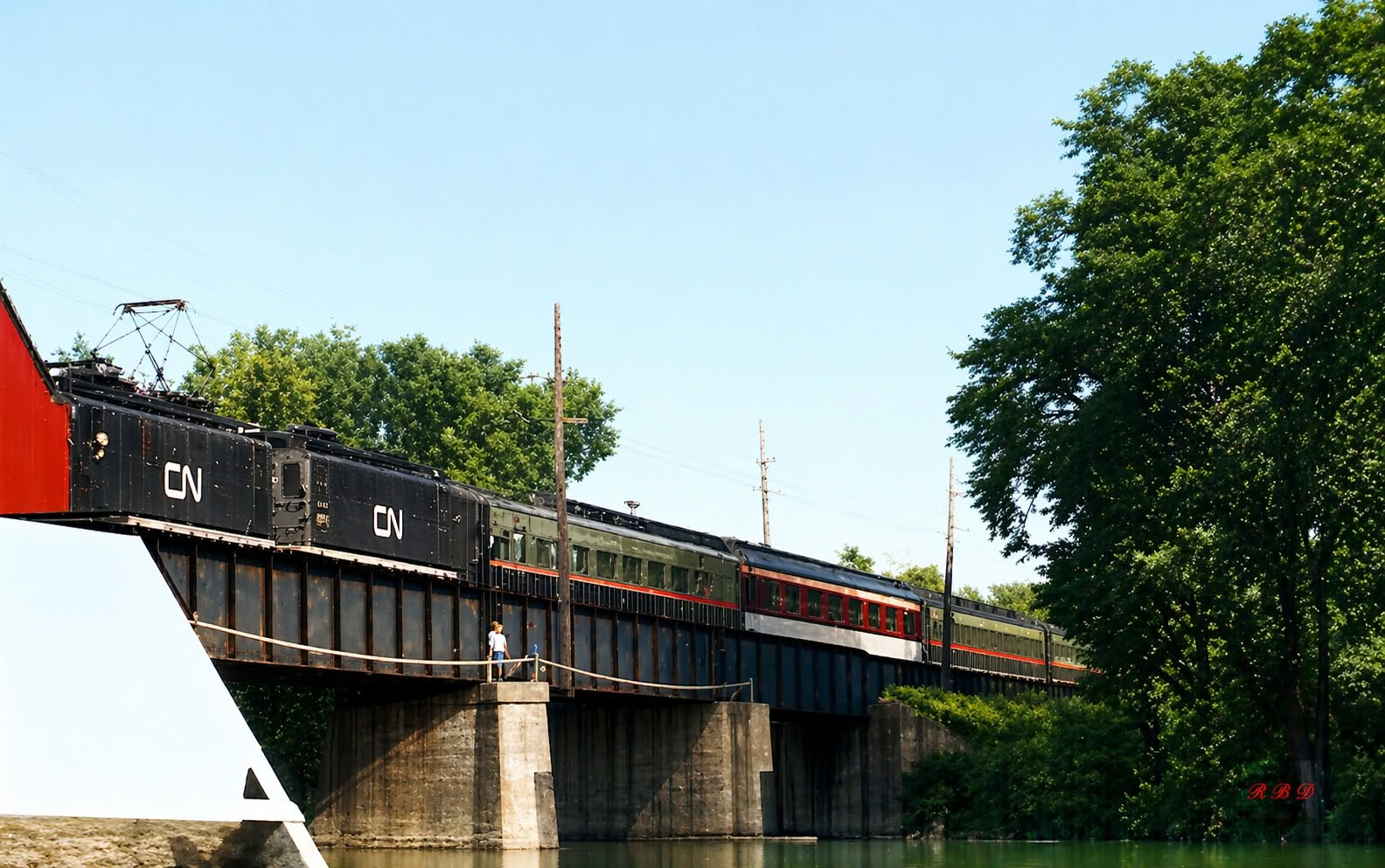
The railway was part of everyday life. Commuter and freight trains ran through the area toward Montreal. Our fathers used those trains for work.
To us kids, the railway meant adventure.
The train bridge was also the shortcut toward Green Island and Laval. Going around could add miles, especially when we had to be at the golf course early in the morning.
Sometimes we would be partway across the bridge when a train appeared. The engineer would see us and sound the horn. We knew the bridge and the concrete supports. We got ourselves out of the train’s path and waited while it thundered past above us.
The sound. The vibration. The train overhead.
Then we climbed back up and kept going as though nothing had happened.
Looking back now, I shake my head.
Back then, it was just the way we got across.
The CNR Cop
One day Mike, Bobby, Tommy and I decided we were going to Montreal.
No tickets. Just four kids and another bright idea.
At first everything was fine. Then a conductor discovered us.
“Tickets?”
Four faces looked back at him.
Nobody had one.
He walked away.
That was not good.
A few minutes later we saw him coming back — and behind him was a CNR police officer.
We ran.
The other three got ahead of me. I could hear them yelling for me while the policeman came closer.
Closer.
Then I felt his hand grab the back of my sweater.
For one second I knew he had me.
The sweater stayed in his hands.
I did not.
I ran for the fence. Mike, Bobby and Tommy were already on the other side yelling, “COME ON, BOBBY!”
I made it over.
The CNR cop stopped at the fence, holding my sweater and shaking his fist.
“I’LL GET YOU, YOU LITTLE BASTARDS!”
We roared laughing and disappeared into Montreal.
Later we split into pairs to hitchhike home. Somehow all four of us made it back before the streetlights came on.
Nobody at home knew where we had been.
To us, it was not some great adventure.
It was just another Saturday.
Caddying at Laval-sur-le-Lac
On weekends we sometimes had to be at Laval-sur-le-Lac Golf Club around six in the morning.
It was a private club. The caddies had their own shack and a ranking system: C-Class, B-Class and A-Class. I remember C-Class paying about $1.10 for eighteen holes, B-Class about $2.30, and A-Class about $3.00 plus tips.
I worked my way through all three classes.
To move up, you had to show that you knew the course and the job. I remember going out with the club professional, Jules Huot, as part of that process.
I moved up damn quick.
The best part was that caddies were allowed to play the course in the evening for free.
That is where I learned golf.
Decades later I would become a scratch golfer and shoot an even-par 72 at Falcon’s Fire.
But that belongs in another chapter.
Empty Bottles
There were times when there was almost nothing to eat at home.
I remember Mom sending me to the little grocery store for bread and maybe peanut butter. I would gather empty beer bottles and return them for the deposit so I could buy food.
That memory explains another story that sounds crazy today.
Mike, Bobby Kibbe and I once got into the storage area at the Gyro Club where there were cases of beer. We did not want the beer. We wanted the bottles.
We took cases away, opened the bottles and poured the beer out.
Every drop.
Then we returned the empties for the deposit money.
We never went back and did it again.
It was wrong. I knew that.
But when I was a kid and there was no food in the house, an empty beer bottle did not look like garbage.
It looked like groceries.
The Music, the Dances, the Freedom

Friday and Saturday nights meant Cedarview or the Gyro. Music mattered. Dancing mattered. Friends mattered.
There were fights sometimes. There were crushes, kisses, parties and teenage foolishness. We fished, rode bikes for miles, swam, played pool, explored and found our own entertainment.
There were no cellphones. Nobody was tracking us. We left in the morning and knew we had better get home.
Were some of the things we did dangerous? Absolutely.
Would I want my grandchildren copying all of them? No.
But those years taught us independence. If we got ourselves into a mess, we often had to figure out how to get ourselves out of it.
Leaving St-Eustache
In May 1961, when I was fifteen, we left St-Eustache.
I do not have one perfect movie scene in my head of the day we left. Memory does not work that way for me. Some moments are crystal clear and others are simply gone.
But I know what I left behind.
Fère Street.
The Burgoynes.
Bobby and the gang.
Green Island.
The railway.
The dances.
And Valerie.
I continued coming back on weekends, so St-Eustache did not disappear from my life overnight. But something had changed.
Childhood was ending.
The next part of my life would take me into Montreal, work, trouble, cars, Mike, Huntingdon, Martha, Sharon, Donna, and roads I could never have imagined at fifteen.
But when one of those old songs comes on, I can still go back.
Mike and Bobby are beside me.
Valerie is waiting.
The train whistle is coming across the water.
And somewhere out there is another adventure.
Those were my five wonderful years.